Title: Lab-Grown Diamond Engagement Rings: A Modern Guide by Prachha Jewels
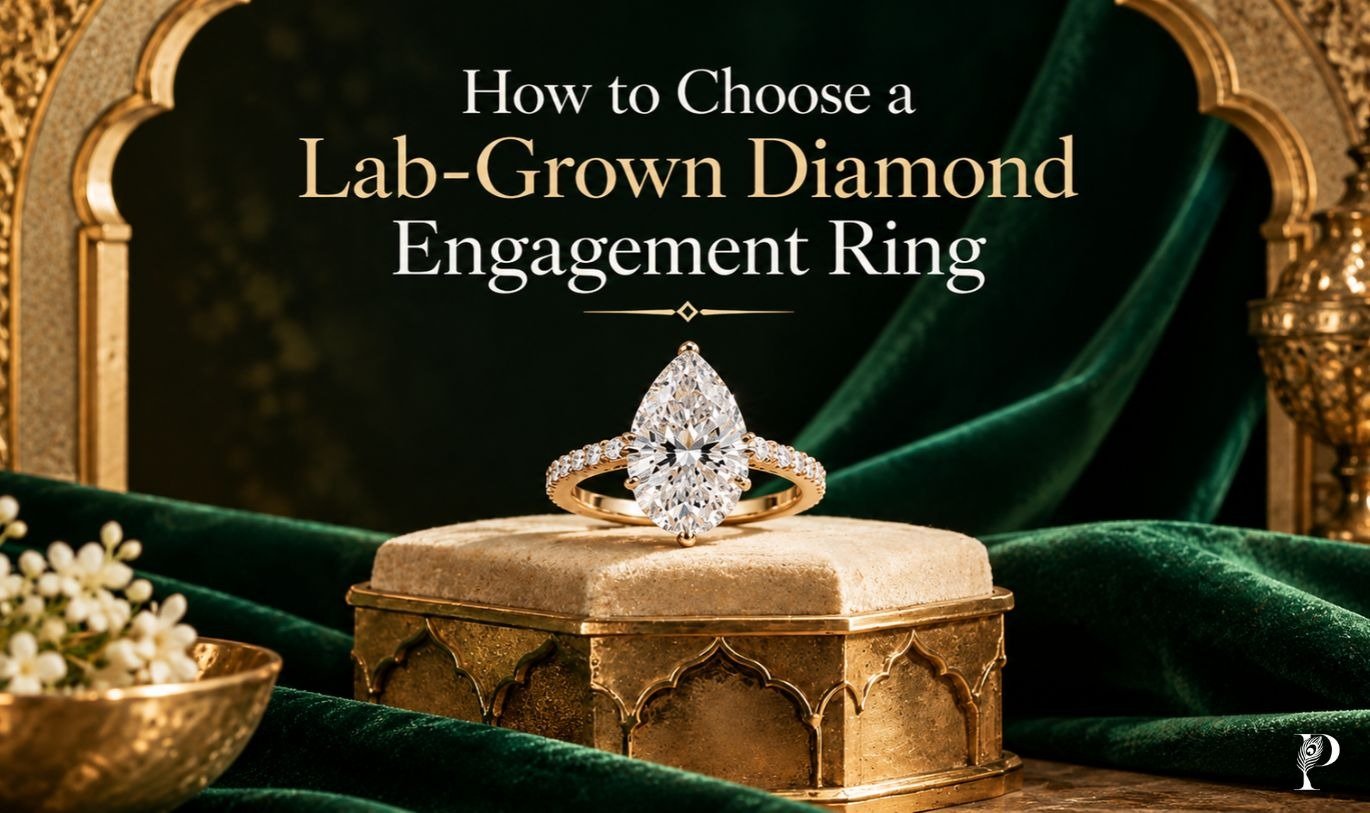
Choosing an engagement ring is a meaningful decision. Whether you prefer a classic solitaire, a modern oval design, or a personalized ring, the diamond, setting, metal and overall design all contribute to the final look.
For couples considering a lab-grown diamond engagement ring, the buying process can be easier when you understand what to look for. Lab-grown diamonds are available in different shapes, carat weights, colour and clarity grades, making it possible to find a design that suits your style and budget.
But how do you choose the right stone?
This guide explains how to choose a lab grown diamond engagement ring, including the 4Cs, diamond shape, certification, setting, metal, carat size, ring size and everyday wearability. It also covers important lab grown diamond ring buying tips for Indian buyers.
What Is a Lab-Grown Diamond?
A lab-grown diamond is a diamond created using controlled technological processes rather than formed naturally underground over geological periods.
Two commonly used production methods are Chemical Vapour Deposition (CVD) and High Pressure High Temperature (HPHT). Although the production processes are different, both are used to create laboratory-grown diamonds.
It is also important to understand the difference between a lab-grown diamond and a diamond simulant. A simulant may resemble a diamond visually but is a different material.
When choosing a lab grown diamond ring, look at the individual diamond’s specifications and grading report rather than relying only on the term “lab-grown.”
1. Decide Your Engagement Ring Budget
Before looking at different lab grown diamond engagement rings in India, establish a budget that feels comfortable for you.
The final price of a ring can depend on several factors:
- Diamond carat weight
- Diamond shape
- Cut quality
- Colour
- Clarity
- Ring setting
- Metal type and purity
- Accent diamonds
- Customisation
- Making charges
- Certification
This means two rings with similar-looking centre stones can have different prices.
If you are researching the lab grown diamond engagement ring price, compare the complete jewellery design rather than judging the price only by carat weight.
A balanced ring with a well-selected diamond, suitable setting and appropriate metal can offer a more cohesive appearance than simply choosing the largest possible stone.
2. Choose the Right Diamond Shape
The diamond shape is one of the most noticeable features of an engagement ring. Your choice can influence the ring’s overall personality and how large the stone appears on the finger.
Round Cut Diamond
A round cut diamond is a classic choice for an engagement ring. A well-cut round brilliant diamond can produce strong brightness and sparkle.
It works particularly well for a traditional solitaire engagement ring, halo setting or three-stone design.
Oval Cut Diamond
An oval cut diamond has an elongated outline and can create an elegant appearance across the finger.
Oval diamonds are often considered by buyers looking for a contemporary alternative to a round diamond.
Pear-Shaped Diamond
A pear shaped diamond combines a rounded end with a pointed tip. It can create a distinctive and elegant look, particularly in solitaire and halo engagement rings.
Emerald Cut Diamond
An emerald cut diamond has step-cut facets that produce broad reflections and a sophisticated appearance.
Because the large, open facets can make inclusions easier to notice, clarity can be an especially important consideration with this shape.
Radiant Cut Diamond
A radiant cut diamond combines a rectangular or square outline with brilliant-style faceting. It can suit someone looking for a modern engagement ring with noticeable sparkle.
Cushion Cut Diamond
A cushion cut diamond generally has softer corners and a romantic appearance. It can work well in classic, vintage-inspired and contemporary settings.
Princess Cut Diamond
A princess cut diamond has a square or rectangular outline and offers a clean, geometric appearance.
When deciding on the diamond shape for an engagement ring, consider personal style, finger proportions, setting design and how the diamond looks from different angles.
Explore Other Lab-Grown Diamond Jewellery
An engagement ring is often paired with other diamond jewellery for special occasions.
Depending on your styling preferences, you can explore lab-grown diamond earrings for a coordinated look.
For a complete jewellery set, a diamond necklace and pendant collection can complement the engagement ring.
For everyday styling, lab-grown diamond bracelets can add subtle sparkle without overwhelming the ring.
3. Understand the 4Cs of Lab-Grown Diamonds
Understanding the lab grown diamond 4Cs is one of the most important steps when comparing engagement rings.
The four Cs are Cut, Colour, Clarity and Carat.
Diamond Cut
Diamond cut affects how effectively the stone interacts with light.
A well-cut diamond can show attractive brightness, fire and scintillation. When comparing stones with similar carat weights, cut quality can make a noticeable difference to their appearance.
It is important not to confuse diamond shape with diamond cut. Shape describes the outline, while cut relates to how the diamond’s proportions and facets interact with light.
Diamond Colour
Diamond colour describes the degree of body colour visible in a diamond.
For buyers who prefer a bright, colourless-looking stone, higher colour grades may be attractive.
Prachha Jewels offers selected lab-grown diamond jewellery featuring EF colour and VS clarity, depending on the design.
The appearance of colour can also be influenced by the metal. A white gold or platinum setting can create a different overall appearance from yellow or rose gold.
Diamond Clarity
Diamond clarity refers to internal characteristics and surface features within a diamond.
A VS clarity diamond can be a practical option for engagement jewellery. However, clarity should not be considered in isolation. The individual stone’s appearance, cut and grading report should also be evaluated.
Diamond Carat
Diamond carat refers to the weight of the diamond.
Carat weight does not automatically determine how large a diamond looks. Shape, proportions and measurements can also influence its visual size.
Therefore, when comparing diamonds, consider diamond carat weight together with shape, cut and dimensions.
4. Check the Lab-Grown Diamond Certification
A lab grown diamond certification or grading report can provide important information about the individual stone.
Depending on the report, you may find details such as:
- Diamond shape
- Carat weight
- Colour grade
- Clarity grade
- Cut information
- Measurements
- Identification or report number
Prachha Jewels offers IGI & SGL certified diamonds and jewellery on applicable products.
If you plan to buy a lab grown diamond engagement ring, review the available certification and check that the information corresponds with the diamond being purchased.
Certification does not replace your evaluation of the overall ring, but it provides documented information that can help you understand and compare the diamond.
5. Choose the Right Diamond Ring Setting
The diamond ring setting holds the centre stone and contributes significantly to the appearance of the engagement ring.
Solitaire Engagement Ring
A solitaire engagement ring focuses attention on one centre diamond.
It is a popular option for someone who prefers a clean, timeless and minimalist design.
Halo Engagement Ring
A halo engagement ring surrounds the centre diamond with smaller accent stones.
This creates additional sparkle and a more decorative appearance.
Hidden Halo Engagement Ring
A hidden halo places accent diamonds beneath the centre stone. It adds detail without making the halo the main feature when viewed from above.
Bezel Set Engagement Ring
A bezel set engagement ring surrounds the edge of the diamond with metal.
It offers a modern appearance and can be suitable for buyers who prefer a more enclosed setting.
Three Stone Engagement Ring
A three-stone design features three main diamonds and creates a balanced look.
When comparing different engagement ring settings, think about personal style, daily activities, maintenance and comfort.
6. Select the Right Metal
The metal can completely change the character of a lab-grown diamond engagement ring.
9KT Gold Engagement Ring
A 9KT gold engagement ring can be an option for buyers looking for a more accessible gold jewellery choice.
14KT Gold Engagement Ring
A 14KT gold engagement ring offers a balance between gold content and everyday practicality.
18KT Gold Engagement Ring
An 18KT gold engagement ring contains a higher proportion of pure gold and offers a richer gold appearance.
White Gold Engagement Ring
A white gold engagement ring provides a clean, contemporary appearance and pairs naturally with colourless-looking diamonds.
Yellow Gold Engagement Ring
A yellow gold engagement ring creates a warm, classic appearance and can work particularly well with Indian-inspired jewellery styles.
Rose Gold Engagement Ring
A rose gold engagement ring has a soft pink tone that can create a romantic and contemporary look.
Platinum Engagement Ring
A platinum engagement ring offers a naturally white precious-metal appearance and is another option for buyers seeking a premium engagement ring.
Choose the metal based on your budget, preferred appearance, existing jewellery and lifestyle.
7. Consider the Diamond Size and Carat Carefully
Many buyers begin their search by asking, “What carat should I buy?”
There is no single correct answer.
The ideal carat size depends on your budget, diamond shape, finger proportions, setting and desired appearance.
For example, an oval or pear-shaped diamond may appear longer across the finger than a round diamond with the same weight.
When comparing lab grown diamond engagement ring price, look at both carat weight and actual measurements.
A slightly smaller centre diamond can still create a beautiful appearance when combined with a well-designed setting and proportionate band.
8. Think About Everyday Wear
An engagement ring is often worn regularly, so everyday practicality matters.
Consider:
- Setting security
- Band thickness
- Ring profile
- Comfort
- Lifestyle
- Maintenance
- Compatibility with other rings
If the wearer has an active lifestyle, a secure and practical setting may be more suitable than a very delicate or high-profile design.
A diamond ring for everyday wear should balance appearance, comfort and practical use.
9. Choose the Correct Ring Size
Correct sizing is essential when ordering an engagement ring.
Professional measurement is generally the best approach. If the purchase is a surprise, you can discreetly use an existing ring as a reference and ask a jeweller to help determine the approximate size.
For a custom ring, confirm the available sizes and resizing policy before finalising your order.
10. Match the Ring With Her Personal Style
Your partner’s existing jewellery can provide useful clues.
For a minimalist style, consider a solitaire or delicate setting.
For a classic style, a round diamond with a traditional setting can create a timeless appearance.
For a modern style, an oval, emerald or radiant diamond can provide a distinctive look.
For a romantic style, consider a pear, cushion or halo design.
If she prefers statement jewellery, a larger centre stone, halo or additional accent diamonds may create the desired effect.
The goal is not simply to find the most expensive ring, but to find an engagement ring that suits her personal style.
11. Consider a Custom Lab-Grown Diamond Engagement Ring
A custom lab grown diamond engagement ring can be a good option when you want more control over the final design.
Depending on the jeweller, customisation may include:
- Diamond shape
- Carat weight
- Colour
- Clarity
- Metal
- Setting
- Accent diamonds
- Band design
- Engraving
Custom jewellery can be especially useful when you already have a specific design in mind or want to create a meaningful piece for your partner.
Prachha Jewels is a Surat-based jewellery brand offering lab-grown diamond jewellery and custom design options.
12. Compare the Complete Ring, Not Just the Diamond
One of the most useful diamond ring buying tips is to compare the entire ring.
Look at:
Shape + Cut + Colour + Clarity + Carat + Measurements + Setting + Metal + Certification + Design
A larger diamond does not automatically mean a better choice for every buyer.
The right ring depends on your budget, preferred appearance, lifestyle and the style of the person who will wear it.
If you are shopping for a lab grown diamond ring in India, compare the specifications and design details carefully before making your decision.
13. What to Check Before Buying Online
If you plan to buy a lab grown diamond engagement ring online, review the product information carefully.
Check:
- Diamond shape
- Carat weight
- Total carat weight
- Colour
- Clarity
- Certification
- Metal type
- Metal purity
- Ring size
- Product dimensions
- Customisation options
- Shipping details
- Return or exchange policy
If a product specification is unclear, contact the jewellery brand before placing your order.
You can explore lab-grown diamond rings to compare available designs.
Lab-Grown Diamond Engagement Ring Buying Checklist
Before making your final decision, check the following:
- Set a comfortable budget.
- Choose your preferred diamond shape.
- Understand the 4Cs.
- Compare carat weight and diamond measurements.
- Review the grading report.
- Check the diamond certification.
- Choose the right metal.
- Select a suitable setting.
- Consider everyday wear.
- Confirm the ring size.
- Review customisation options.
- Check the jewellery brand’s policies.
- Compare the complete ring rather than only the centre diamond.
Final Thoughts
- Choosing a lab-grown diamond engagement ring becomes much easier when you understand what you are comparing. Start with your budget, then consider the diamond shape, 4Cs, carat weight, certification, setting, metal, ring size and everyday wearability.
- Rather than focusing on one specification, look at how all these elements work together.
- Whether you prefer a classic round cut diamond, elegant oval cut diamond, distinctive pear shape, sophisticated emerald cut or a personalized custom design, choose an engagement ring that reflects your partner’s personality and your shared story.
- For couples exploring lab grown diamond engagement rings in India, Prachha Jewels offers a range of lab-grown diamond jewellery designed for modern Indian buyers.
- Explore the lab-grown diamond ring collection to discover engagement ring styles for different preferences and occasions.
See also: Tuck Beard Law: Your Trusted Legal Ally in East Tennessee
Frequently Asked Questions
Are lab-grown diamonds good for engagement rings?
Yes. Lab-grown diamonds can be used for engagement rings and are available in various shapes, carat weights, colour grades and clarity grades. The individual diamond’s specifications and certification should be reviewed before purchase.
What carat lab-grown diamond should I choose?
The ideal carat weight depends on your budget, preferred appearance, diamond shape and ring setting. There is no universal carat size that is right for every engagement ring.
Is VS clarity good for an engagement ring?
VS clarity can be a practical choice for an engagement ring. However, the individual diamond should be evaluated along with its cut, appearance and grading report.
Is EF colour good for a lab-grown diamond?
EF is a high colour range and can provide a bright, colourless-looking appearance. The right colour grade also depends on the metal and design of the engagement ring.
Which diamond shape looks biggest?
The apparent size of a diamond depends on its shape, measurements and proportions. Elongated shapes such as oval and pear can create a larger-looking appearance across the finger for their carat weight.
Are lab-grown diamonds certified?
Yes. Lab-grown diamonds can be graded by recognised gemological laboratories. A grading report provides documented information about characteristics such as carat, colour, clarity, shape and measurements.
Is IGI certification important for a lab-grown diamond?
An IGI grading report can provide documented information about a lab-grown diamond’s characteristics. Buyers should review the report and ensure that its details correspond with the diamond being purchased.
Which metal is best for an engagement ring?
There is no single metal that suits every buyer. White gold, yellow gold, rose gold, 9KT, 14KT, 18KT gold and platinum offer different appearances, compositions and price points.
Are lab-grown diamonds suitable for everyday wear?
Lab-grown diamonds have the physical characteristics of diamond. However, everyday wearability also depends on the ring’s setting, metal, design and how the jewellery is maintained.
Can lab-grown diamonds be customised?
Yes. Depending on the jewellery brand, a custom lab-grown diamond engagement ring can include personalised choices such as diamond shape, carat, metal, setting, accent stones and band design.